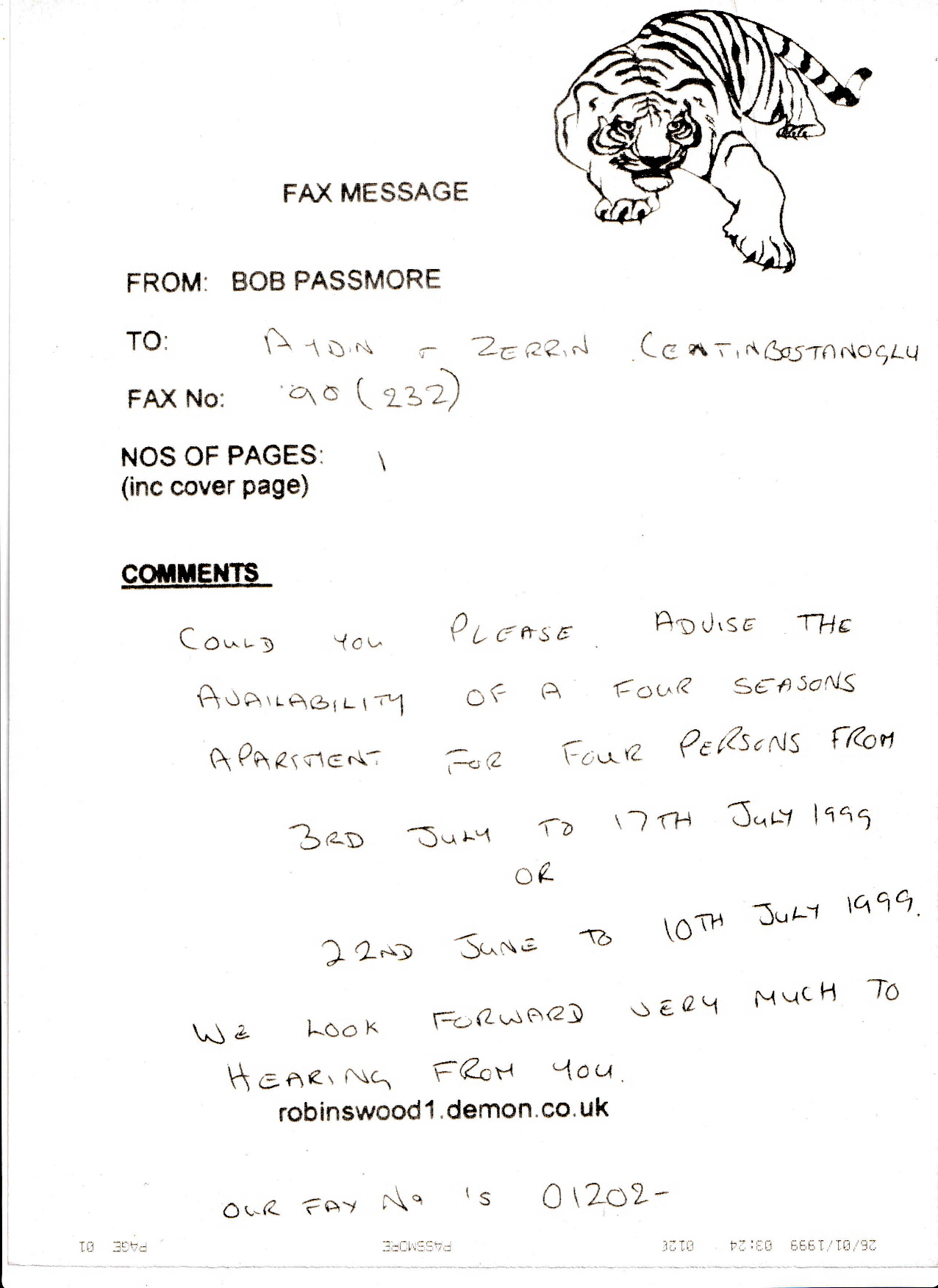
Early in 1999 I received a message from Bob Passmore in England. Bob was looking for an apartment in Karaburun for himself, his wife Jan, and their friends Nick and Adrienne. Our correspondence continued by e-mail and fax. At that time the internet was not yet an ordinary part of daily life, and arranging a holiday in another country with someone you had never met required a very different kind of trust.
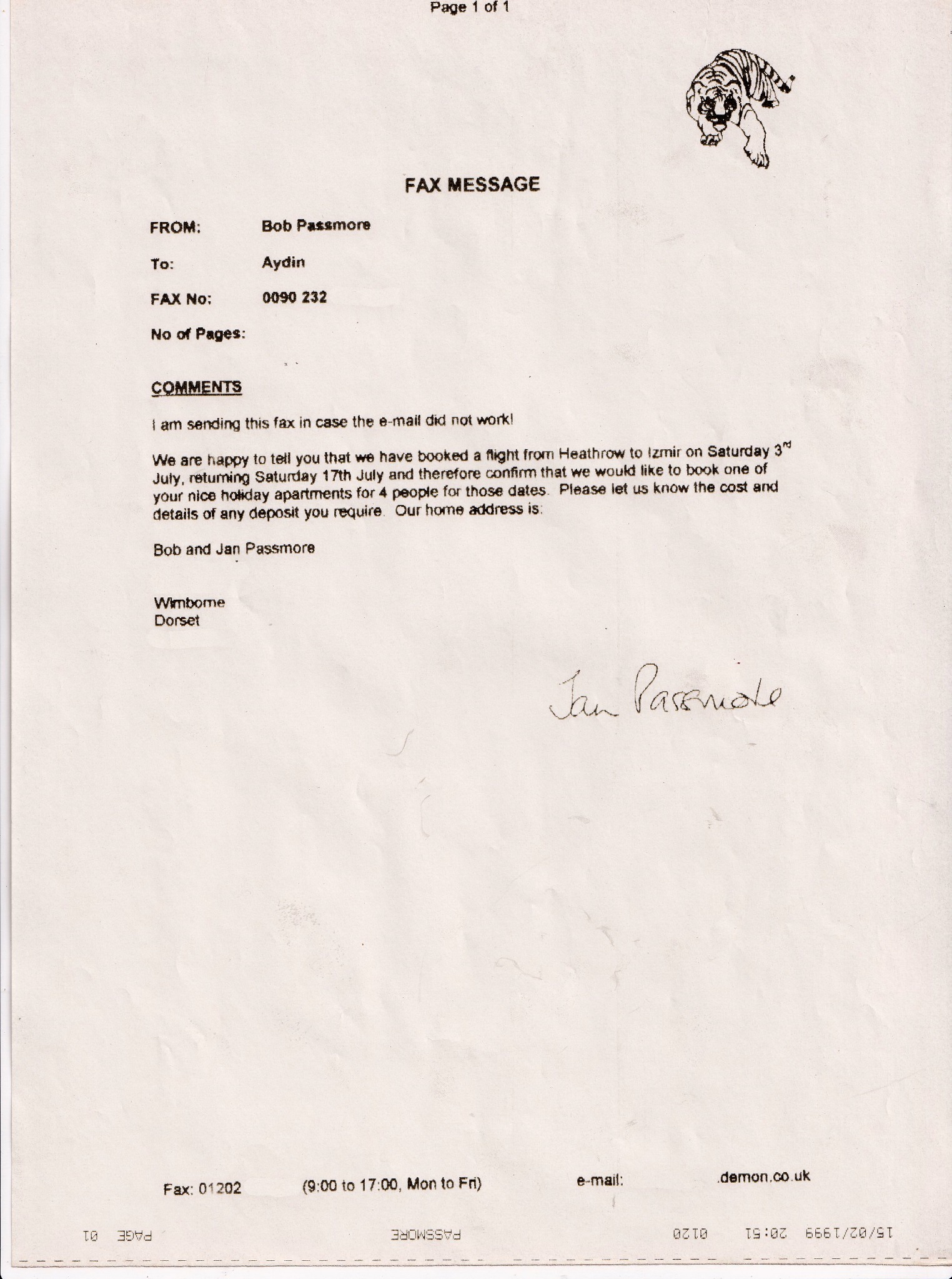
In one of his first faxes Bob asked about two possible date ranges. Soon afterwards they told me they had booked their flights: they would arrive from Heathrow on 3 July and return on 17 July.
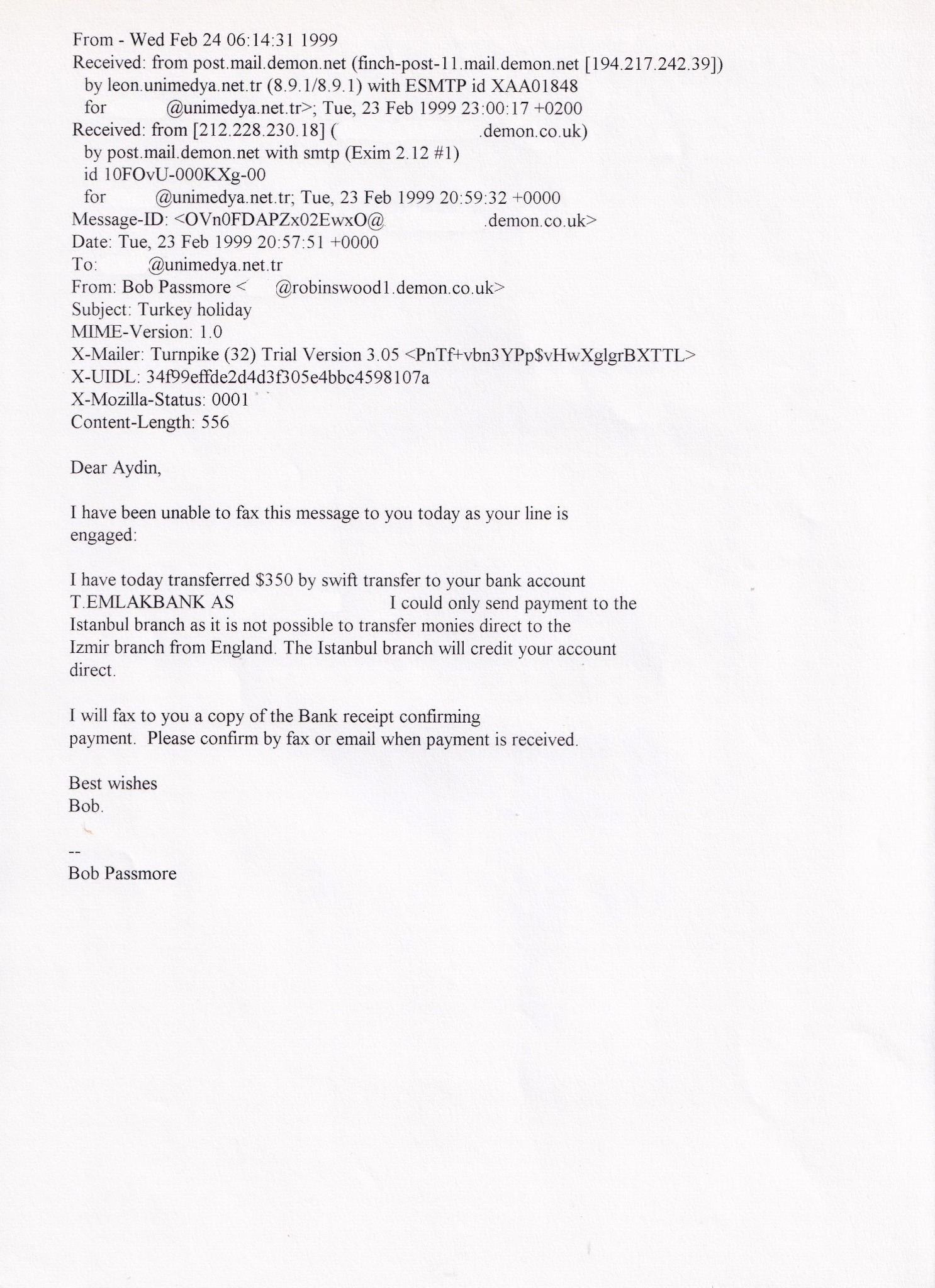
On 23 February 1999, Bob wrote that he had transferred US$350 to my bank account by SWIFT. What strikes me today is not the amount but the trust behind it: he was sending money months in advance to someone he had never met in person.
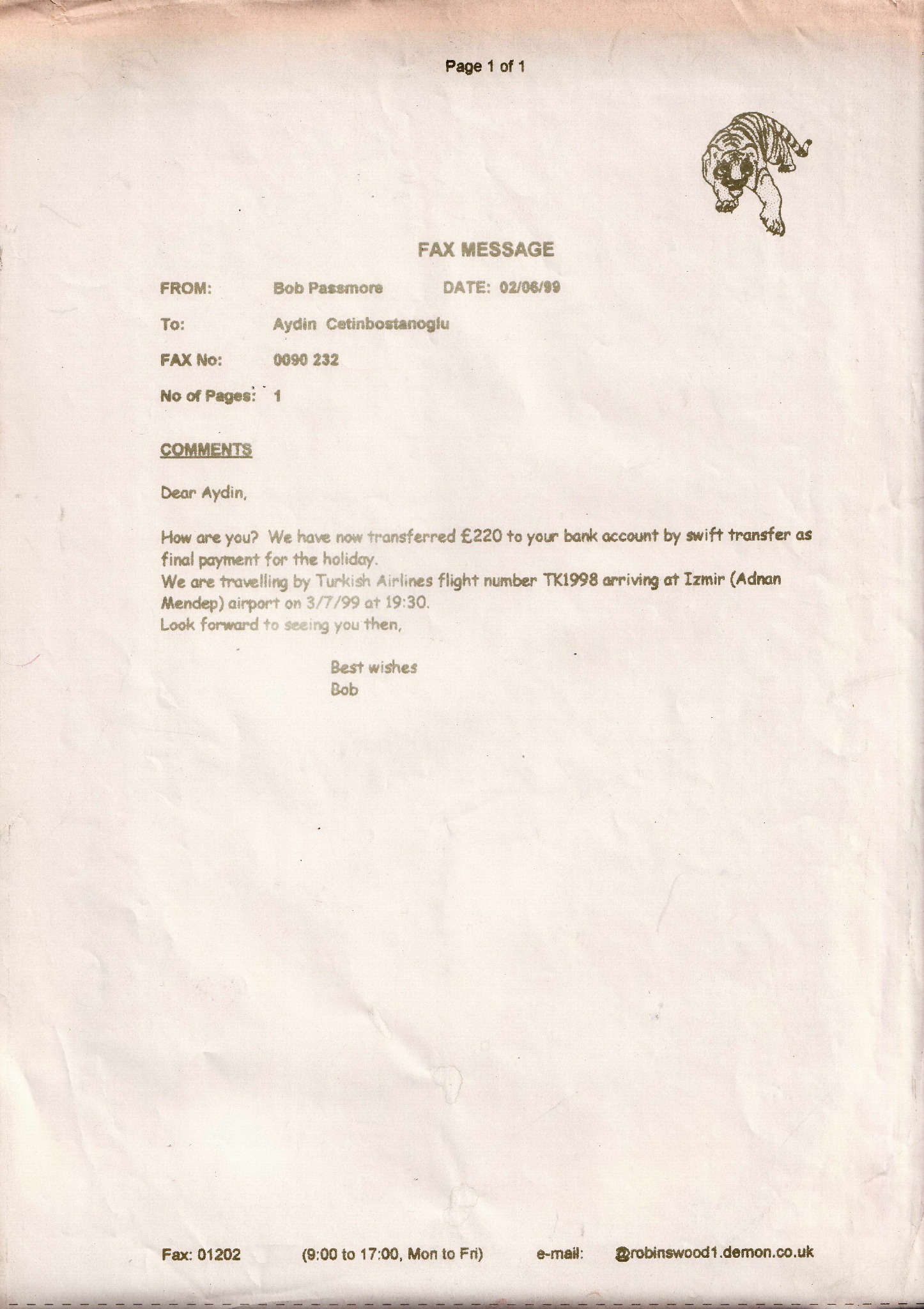
On 2 June he faxed again to say that the remaining £220 had been transferred as the final payment. He also gave the Turkish Airlines flight details and ended simply: “Look forward to seeing you then.”
By the time the four of them boarded their plane in July, the entire accommodation cost had already been sent to a person they had never seen. In the world of online booking platforms this may seem like a small detail; in 1999 it represented a very real relationship of trust.
Bob, Jan, Nick and Adrienne arrived in İzmir on 3 July 1999. The people with whom we had exchanged faxes and e-mails for months were finally in Karaburun. In those years our relationship with guests was not limited to providing accommodation. Whenever we could, we showed them the places and the local life we knew.
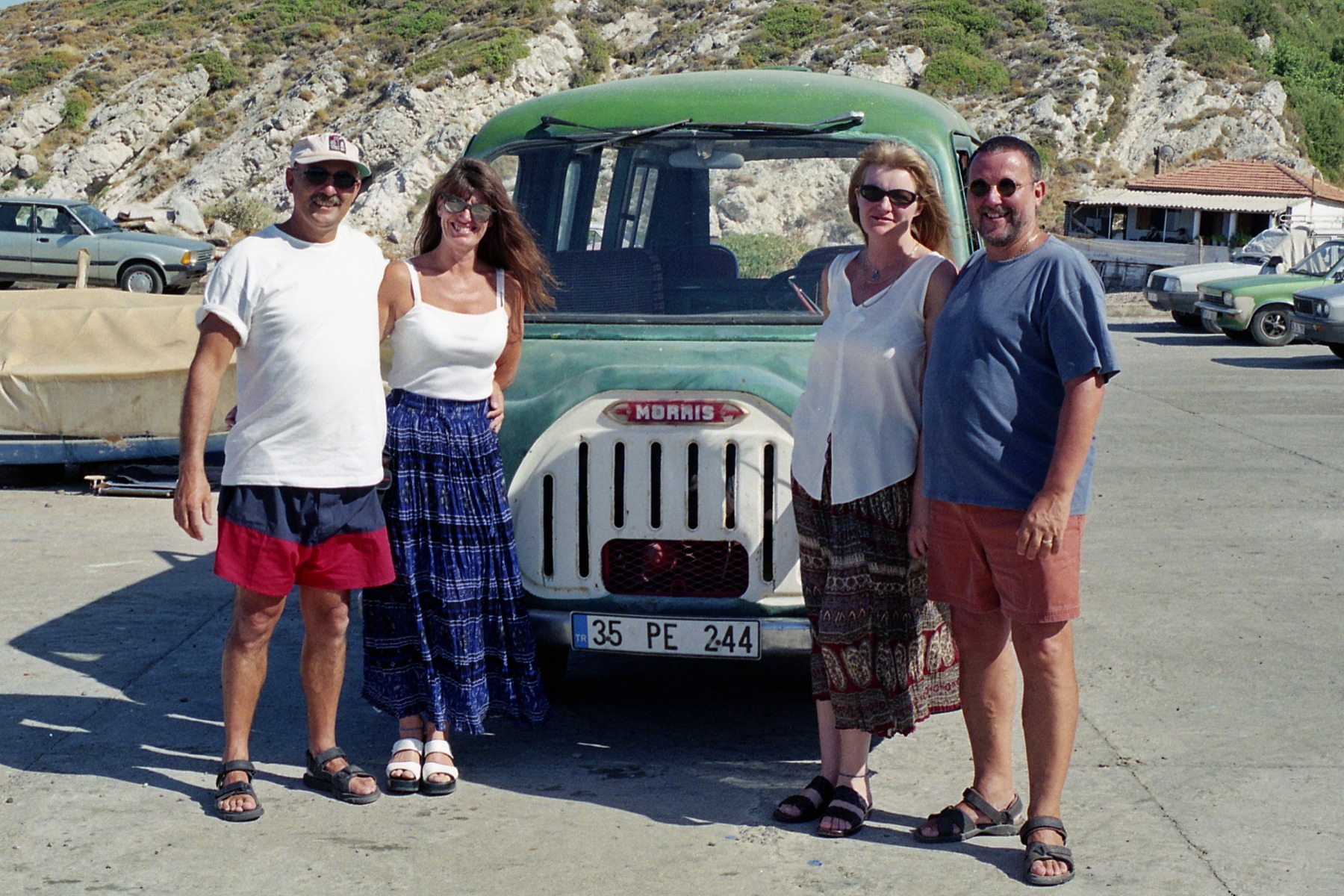
One day, while I was showing them around Karaburun, we came across an old van by the shore. It was a British-made Morris. The coincidence amused all of us: four visitors from England, on a small Aegean peninsula, suddenly standing in front of a familiar piece of British motoring history.
They stopped and posed for a photograph. It was not planned; it simply happened in the course of the day. That is perhaps why the photograph has remained such a warm memory for me.
On another day I took them into the mountains, to the places where the goat herds were. Away from the settlements, Bob stopped, took a deep breath and looked around. Then he said something I have never forgotten: “We recharged our batteries.”
Twenty-seven years later, when I opened the guestbook again, I was especially moved to find the same thought preserved there.
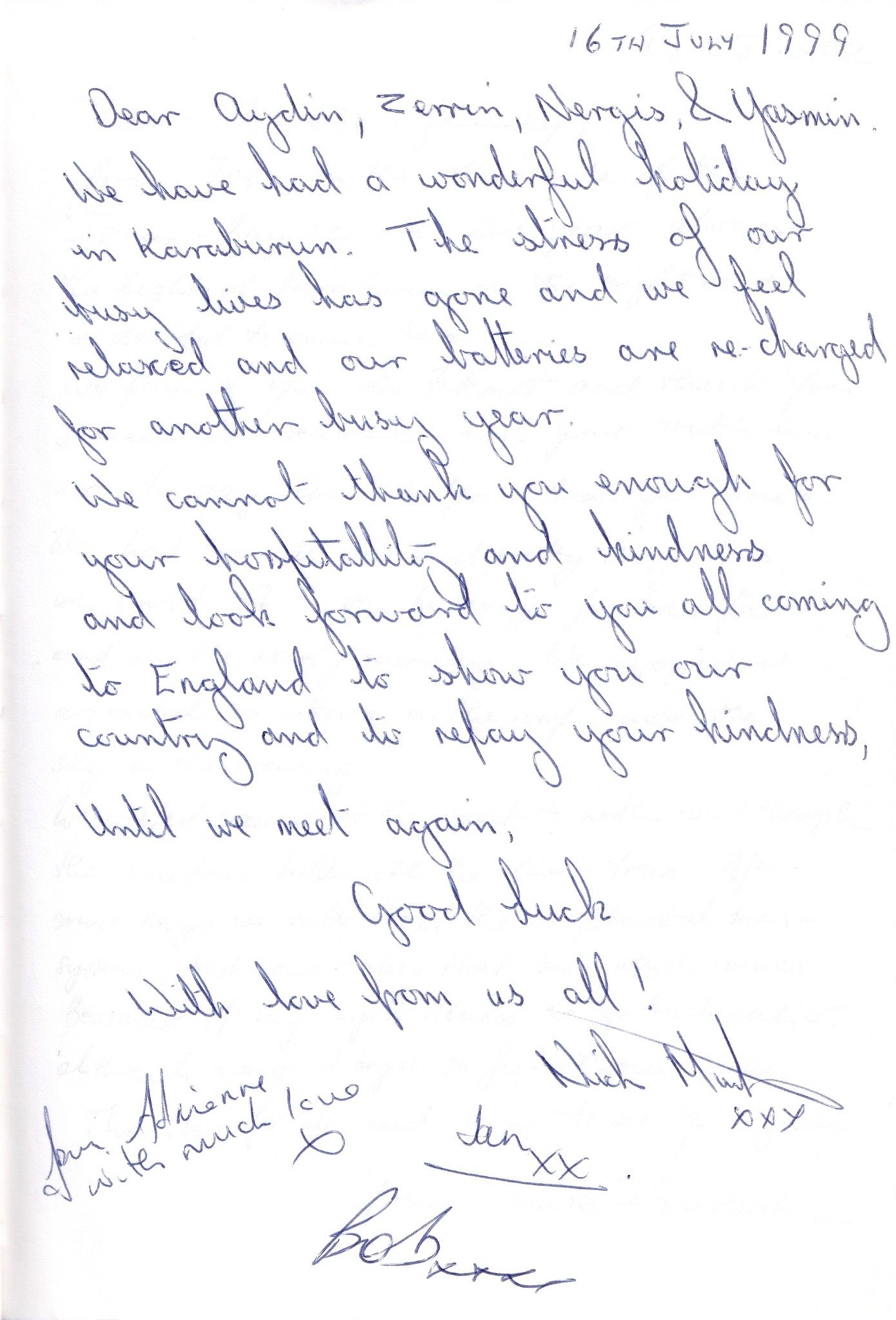
On 16 July 1999, the day before they left, the four of them wrote that they had had a wonderful holiday in Karaburun, that the worries of their busy lives had gone, and that they felt relaxed. Then came the same image: “…our batteries are re-charged for another busy year.”
They also wrote that they could not thank us enough for our hospitality and kindness, and invited us to England so that they could show us their country and repay that kindness. At the bottom of the page were four signatures: Adrienne, Jan, Nick and Bob.
Bob, Jan, Nick and Adrienne returned to England on 17 July. The story could easily have ended there. But about a month later Turkey suffered a major disaster.
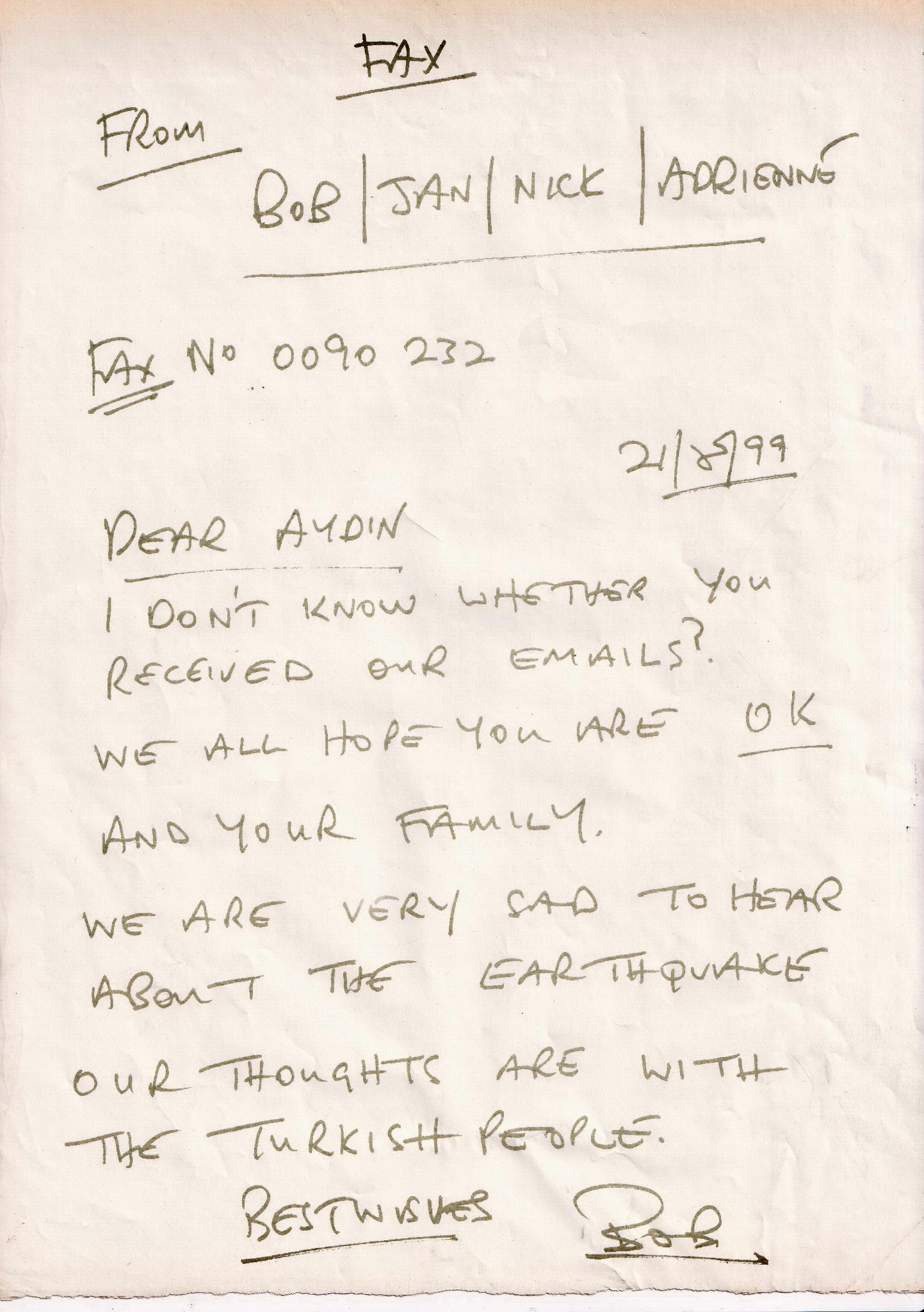
Four days after the 17 August 1999 Marmara earthquake, another fax arrived from Bob. This one was not a typed booking message. It was written by hand, with four names across the top: BOB / JAN / NICK / ADRIENNE.
Bob wrote that they hoped we and our family were all right. Then came the message that mattered most: “We are very sad to hear about the earthquake. Our thoughts are with the Turkish people.”
Looking at these documents today, I no longer see only an old reservation file. The first pages contain the cautious correspondence of people who had never met. Then flights are booked, US$350 is sent, the remaining £220 follows, and four people board a plane for Karaburun.
Then real life enters the file: the old Morris on the shore, a spontaneous photograph, a day among the goat herds in the mountains, and Bob taking a deep breath and saying that they had recharged their batteries.
At the end is a completely different document. There is no reservation, no money and no flight time—only four people, back in England, wondering whether the people they had met a few weeks earlier were safe after an earthquake.
Twenty-seven years later, that change is what matters most to me. In February Bob was someone in England asking a stranger in Karaburun about an apartment, and I was simply the unknown host to whom he was sending his money months in advance. By August, when he heard about the earthquake in Turkey, we had become people whose safety he and his friends cared about.
That is what I want to preserve in the old Mimas Garden guest archive: not only the dates of reservations, but the traces of the human relationships that formed between them.